Conventional passive dampers cannot adapt to changing road surfaces or cornering loads within a single stroke. Dynamic suspension stabilization systems solve that limitation by adjusting damping force in real time based on sensor input from wheel travel, steering angle, lateral acceleration, and vehicle pitch. The goal is consistent body control without sacrificing ride comfort on rough pavement — a balance that passive setups struggle to achieve without compromise.
Semi-Active Versus Fully Active Architectures
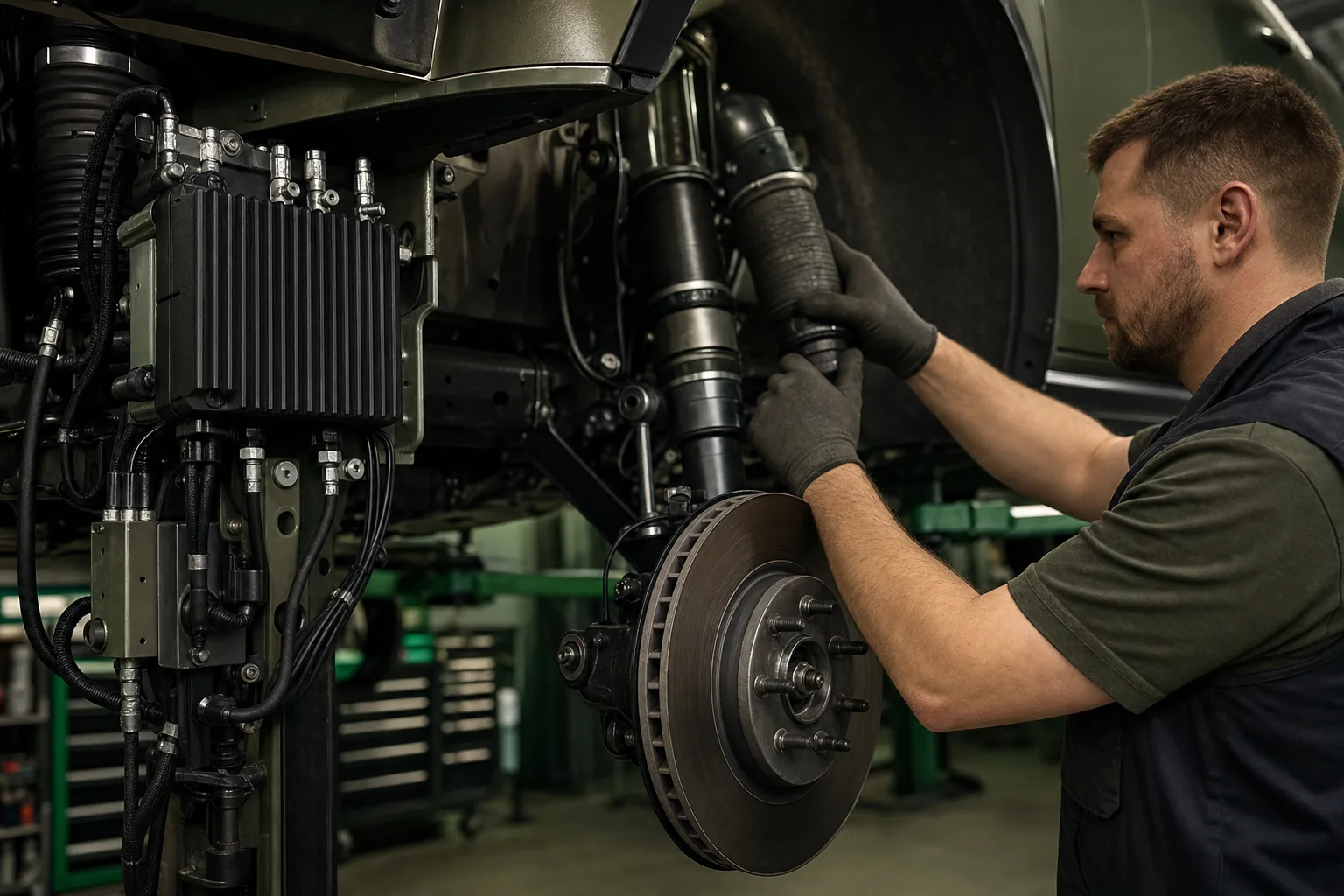
Semi-active systems use electronically controlled valves inside conventional shock absorbers to change fluid flow resistance millisecond by millisecond. They cannot add energy to the suspension; they only resist motion more or less aggressively. Fully active systems include hydraulic or pneumatic actuators that can push or pull the suspension beyond what spring and damper geometry alone would allow, actively countering dive under braking and squat under acceleration.
- Semi-active dampers appear on many luxury sedans and crossovers as adaptive or sport mode suspension options.
- Fully active setups are less common on mainstream vehicles but appear on high-performance platforms where body attitude control is prioritized.
- Both architectures rely on a central control module that processes sensor data and sends commands to individual corner actuators or damper solenoids.
Knowing which type your vehicle uses determines what failure modes to expect and whether a warning light will appear before you feel a handling difference.
How Stabilization Reduces Body Roll in Corners
During cornering, weight transfers to the outside wheels and the body rolls toward the turn. Passive anti-roll bars resist this motion mechanically, but their stiffness is fixed. Dynamic systems increase damping on the compression side of the outside damper and the rebound side of the inside damper simultaneously, reducing roll rate without stiffening the entire suspension for straight-line comfort.
Steering angle and lateral g sensors tell the module how aggressively to firm each corner. At low lateral loads — gentle lane changes — damping changes remain subtle. At higher loads — highway ramp merges or tight curves — the system applies stronger stabilization to keep the body flat and maintain tire contact patch consistency. When functioning correctly, the vehicle feels planted without transmitting harsh impacts from expansion joints or patched asphalt.
Road Isolation and Pitch Management
Stabilization is not only about cornering. Wheel accelerometers detect sharp bumps and instruct dampers to soften momentarily, allowing the tire to follow the surface rather than skipping across it. Pitch sensors monitor nose dive under braking and rear squat under acceleration, adjusting front and rear damping asymmetrically to keep the chassis level and preserve headlight aim.
- Soft damping over isolated bumps improves isolation; firm damping over repeated undulations controls oscillation.
- Brake dive control firms rear rebound and front compression during deceleration events above a threshold.
- Some systems link to adaptive headlights, using pitch data to keep beam patterns aligned with the road.
Drivers notice degradation in isolation before they notice roll control loss. A vehicle that suddenly feels busy over minor surface irregularities, or bounces once after each bump where it previously settled immediately, may have one corner damper stuck in a firm mode or a sensor providing inaccurate wheel travel data.
Early Warning Signs Before Handling Changes
Stabilizer modules and damper actuators often fail gradually. The suspension control warning light may illuminate while the vehicle still handles acceptably in normal driving because the module has switched to a default passive map with fixed damping values. Do not ignore the light simply because the car feels fine on your daily commute.
- Illuminated suspension or chassis stability warning with no immediate handling change.
- Audible clicking or whining from a wheel arch during low-speed turns, indicating actuator or valve movement issues.
- One corner sitting slightly lower after parking overnight, suggesting internal seal failure in an air or hydraulic unit.
- Sport or comfort mode selection producing no perceptible difference in ride character.
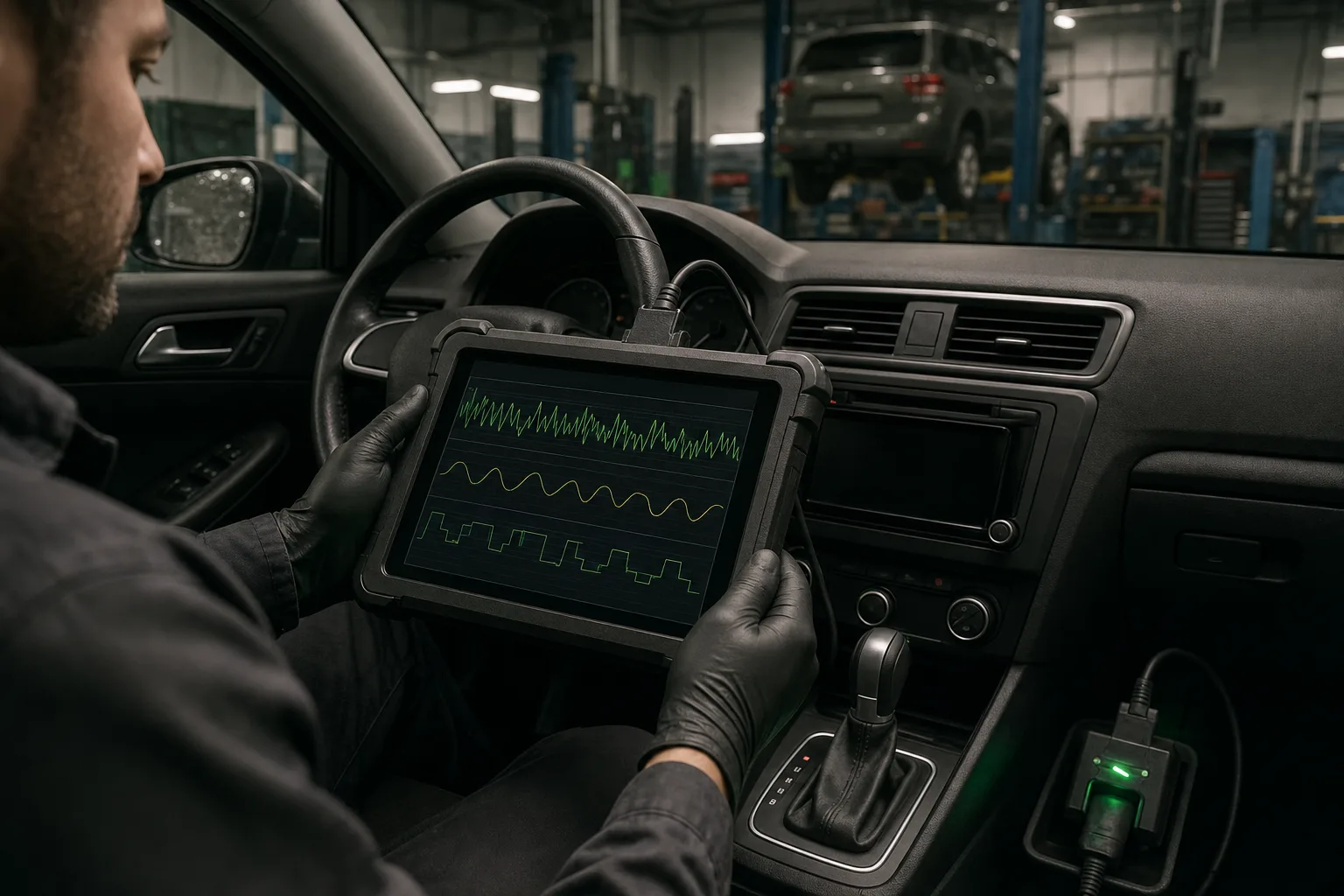
Scan tool data reveals fault codes for individual damper circuits, supply voltage drops, or implausible sensor readings. A single failed corner actuator can cause the module to disable adaptive function across all four wheels, which explains why a minor component fault produces a broad system warning.
Calibration After Component Replacement
Replacing a damper, height sensor, or control module is not always a direct swap. Many systems require ride height calibration, zero-point adjustment for accelerometers, or a guided road test procedure so the module relearns normal sensor ranges. Skipping calibration leaves the system operating on incorrect baseline data, which produces harsh ride quality or recurring fault codes despite new hardware.
After professional replacement and calibration, verify operation by testing both comfort and sport modes on roads with varied surfaces. Body roll in a controlled turn should feel consistent with manufacturer expectations, and the vehicle should settle quickly after single bumps without secondary oscillation. Document the repair and calibration date so future technicians understand the system baseline if warnings reappear months later.