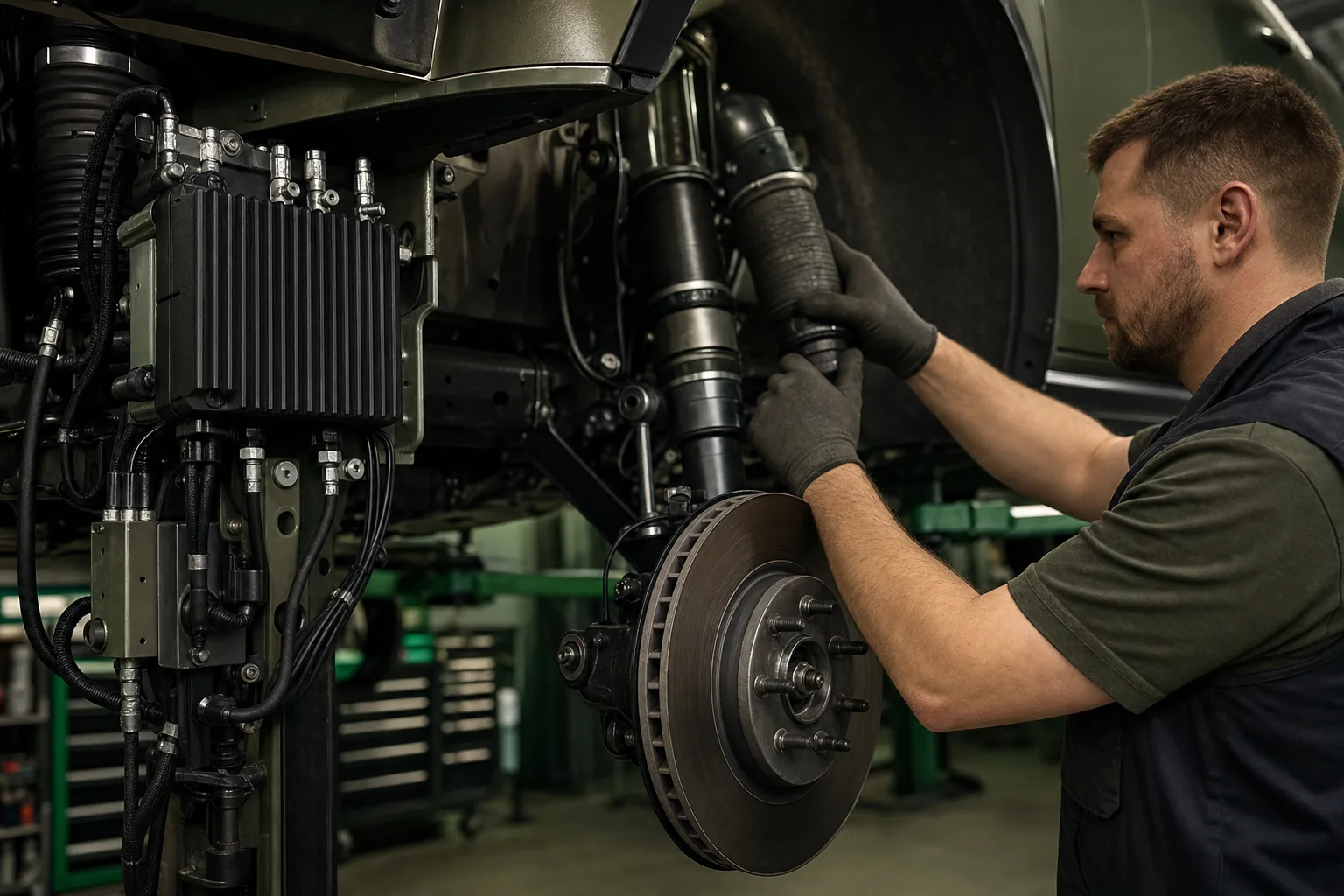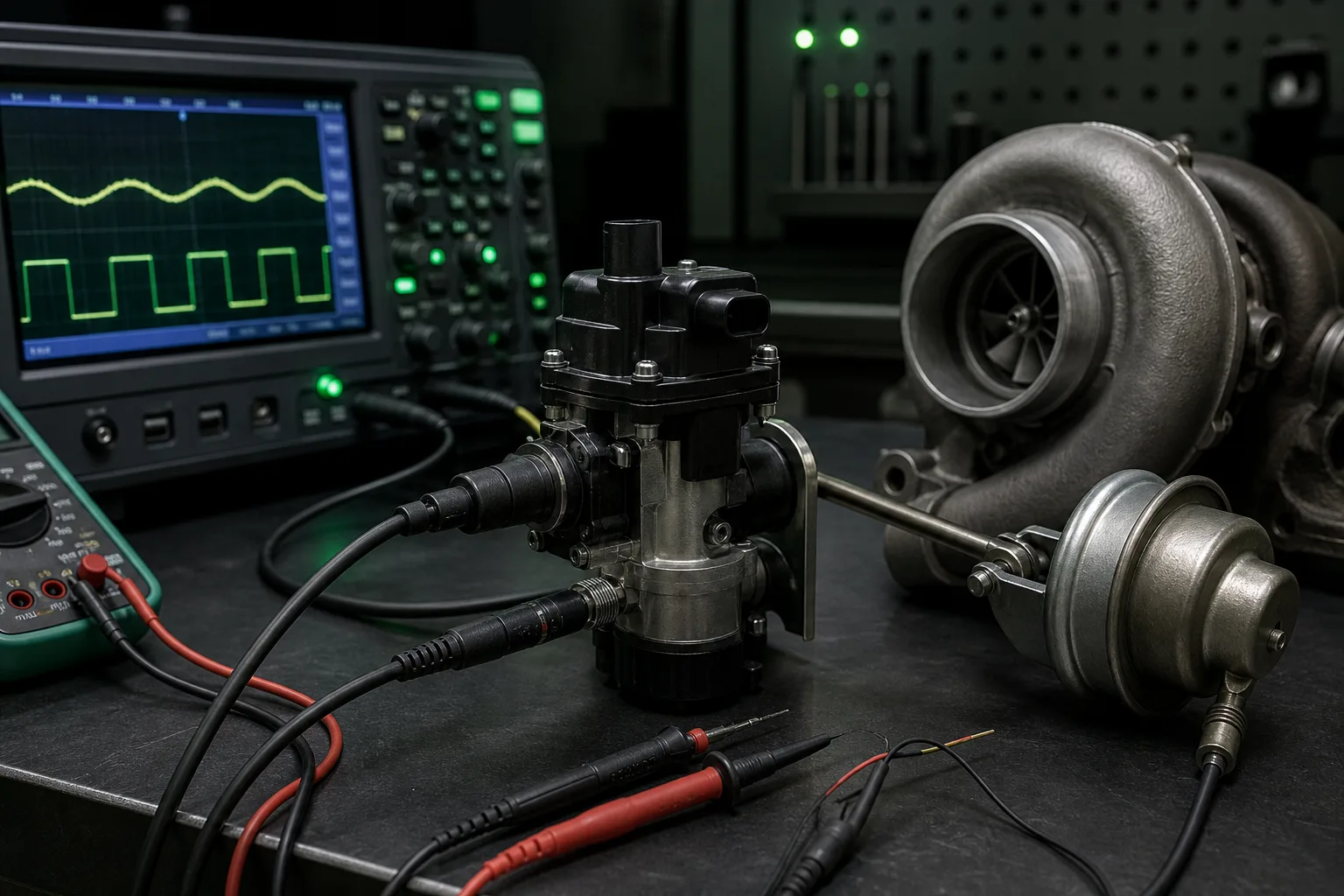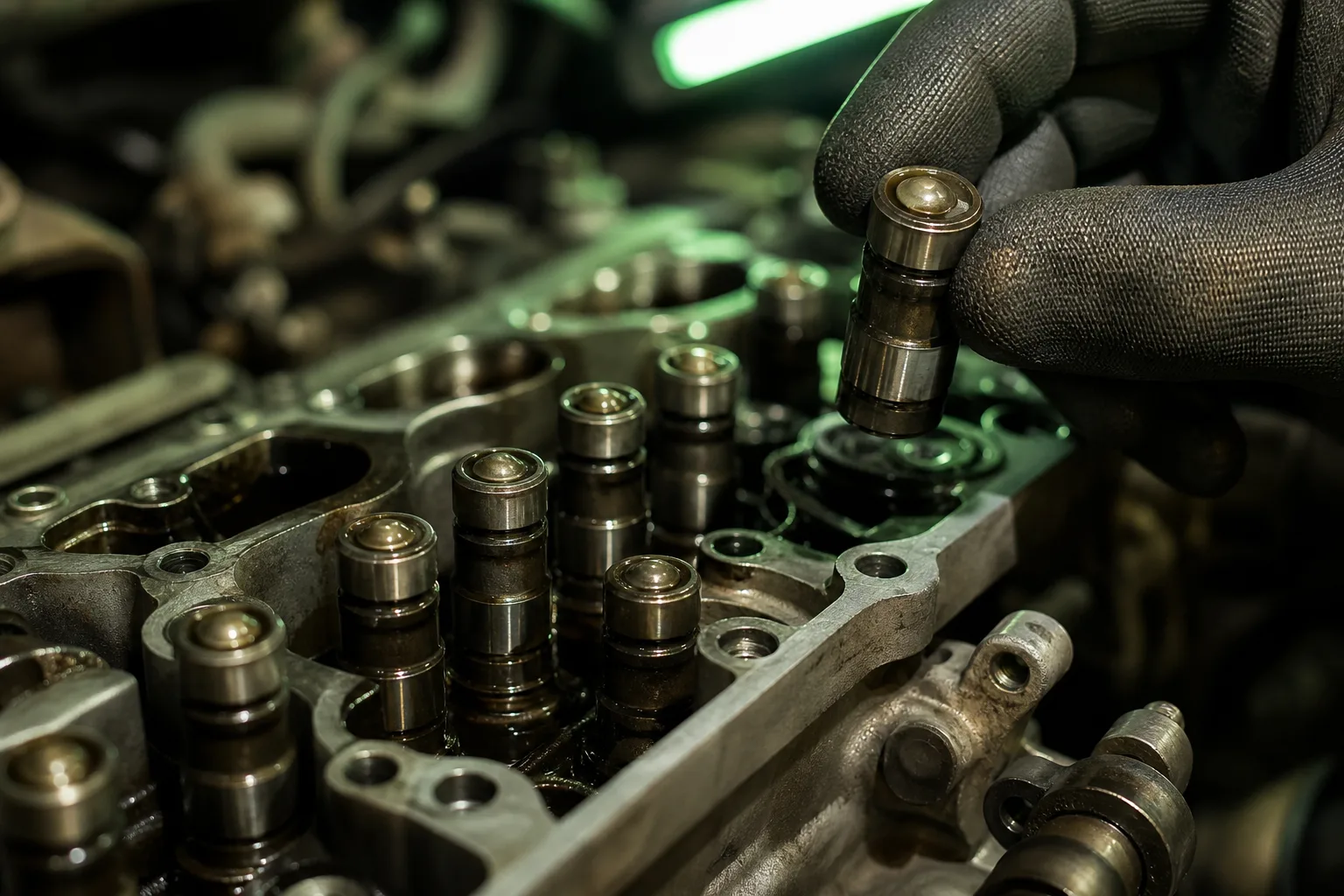
Hydraulic valve lifters sit between the camshaft and pushrods or rocker arms, maintaining zero lash in the valvetrain while compensating for thermal expansion. When they function correctly, you hear nothing unusual at idle or under load. When they fail, the engine develops rhythmic ticking, misfire-like hesitation, or power loss that owners often misattribute to spark plugs or fuel delivery. Understanding how lifters work helps you describe symptoms accurately before a technician opens the engine.
How Hydraulic Lifters Maintain Valve Clearance
Each lifter contains a plunger and spring inside a housing filled with engine oil. As the cam lobe pushes the lifter upward, oil pressure keeps the plunger extended against the pushrod or rocker. When the lobe rotates away, the plunger retracts slightly to absorb clearance changes caused by temperature swings. This self-adjusting design eliminates periodic manual lash adjustment on most modern overhead valve and overhead cam engines.
Lifters depend on clean oil reaching them through narrow galleries in the block and cylinder head. Restricted passages, aerated oil, or worn check balls inside the lifter prevent proper plunger extension. The result is excessive clearance between the rocker and valve stem, which produces the characteristic tick that many drivers notice first thing in the morning.
Identifying Tick Patterns at Cold Start and Warm Idle
Not every engine noise indicates lifter failure. Healthy engines may produce brief ticking during the first few seconds after startup while oil pressure builds and air bleeds from the lifter bodies. The distinction lies in duration, rhythm, and temperature behavior.
- Normal bleed-down tick fades within ten to thirty seconds once oil reaches operating temperature and pressure stabilizes.
- Failed lifter tick persists at warm idle, often synchronized with a single cylinder firing order and audible from the valve cover area.
- Tick that increases with engine speed but does not change with load may indicate a collapsed lifter rather than an exhaust leak or accessory drive noise.
- Tick accompanied by rough idle or a misfire code on one cylinder strongly suggests the lifter no longer holds pressure and the valve is not opening fully.
Recording when the noise appears — cold only, hot only, or constant — gives technicians a useful starting point before they perform cylinder balance tests or remove valve covers for direct inspection.
Lifter Collapse and Its Effect on Performance
Collapse occurs when the internal check valve or plunger seal fails and the lifter can no longer maintain height under cam pressure. The affected valve opens less than designed, reducing compression on that cylinder and sometimes triggering misfire detection. At highway speeds, a collapsed lifter may cause noticeable power loss on one bank or a persistent check engine light with cylinder-specific codes.
Mechanical collapse differs from simple bleed-down. Bleed-down lifters usually recover once oil pressure returns; collapsed units remain short regardless of temperature. Technicians confirm collapse by measuring valve lift with the cover removed or by comparing relative compression across cylinders. In severe cases, continued operation with a collapsed lifter accelerates cam lobe and rocker wear because contact stress concentrates on a smaller area.
Oil Quality, Pressure, and Gallery Restriction
Before recommending lifter replacement, professional shops evaluate whether oil supply problems caused or contributed to the failure. Low oil level, incorrect viscosity for climate conditions, extended drain intervals, or sludge buildup in galleries can mimic lifter failure across multiple cylinders.
- Oil pressure readings at idle and at two thousand rpm reveal supply adequacy to the valvetrain.
- Used oil analysis or visual inspection of drain pan sediment indicates sludge that may block lifter feed holes.
- Recent overheating events can varnish lifter internals and cause sticky plungers that tick intermittently.
- Aftermarket oil additives marketed as lifter quieting agents rarely repair mechanical collapse and may mask worsening damage.
Addressing oil supply issues alone sometimes resolves tick on engines with minor bleed-down problems. When one or two lifters show mechanical failure while oil condition and pressure are normal, isolated replacement or full set replacement becomes the appropriate path depending on engine design and mileage.
When Replacement Becomes Urgent
Intermittent cold tick without performance impact can be monitored through the next oil change cycle if oil pressure and compression tests remain within specification. Replacement urgency increases when any of the following conditions appear.
- Persistent tick at operating temperature lasting more than one minute after startup.
- Confirmed collapsed lifter with reduced valve lift or cylinder-specific misfire codes.
- Metal contamination in oil suggesting internal wear from continued operation on failed components.
- Cam lobe or rocker damage visible during inspection, which requires lifter replacement as part of valvetrain restoration.
Some engines use replace-only lifters integrated into roller rocker assemblies; others permit individual lifter swap without removing the cylinder head. Your technician will identify which design your engine uses and whether partial replacement risks mismatched wear across the remaining set. After replacement, verify quiet operation at hot idle and confirm misfire codes do not return during a road test that includes acceleration and deceleration across the full rpm range.