Shift hesitation is one of the most commonly reported transmission complaints, yet it rarely stems from a single failed part. Modern automatic and dual-clutch transmissions coordinate input shaft speed, output shaft speed, wheel speed sensor data, throttle position, and line pressure commands to execute each gear change within milliseconds. When any input in that chain arrives late, inaccurate, or out of range, the transmission control module delays the shift or applies clutch pressure conservatively — producing the pause or jerk drivers describe as hesitation.
How the Transmission Control Module Decides When to Shift
The transmission control module does not shift solely based on engine rpm. It calculates optimal shift points from a map that considers vehicle speed, load, gradient, and driver demand. Before executing a shift, the module verifies that input and output speeds are synchronized within tolerance, that the target gear solenoid responded to the initial command, and that line pressure is sufficient to apply the next clutch pack without slip.
- Upshift hesitation often occurs when the module waits for turbine speed to match calculated target values.
- Downshift hesitation may reflect protective logic preventing aggressive engine braking on slippery surfaces.
- Adaptive learning tables modify shift timing based on recent driving history and component wear compensation.
Resetting adaptive values without addressing underlying mechanical or sensor issues produces temporary improvement followed by return of the original complaint as the module relearns the same compensations.
Wheel Speed Data and Its Role in Shift Timing
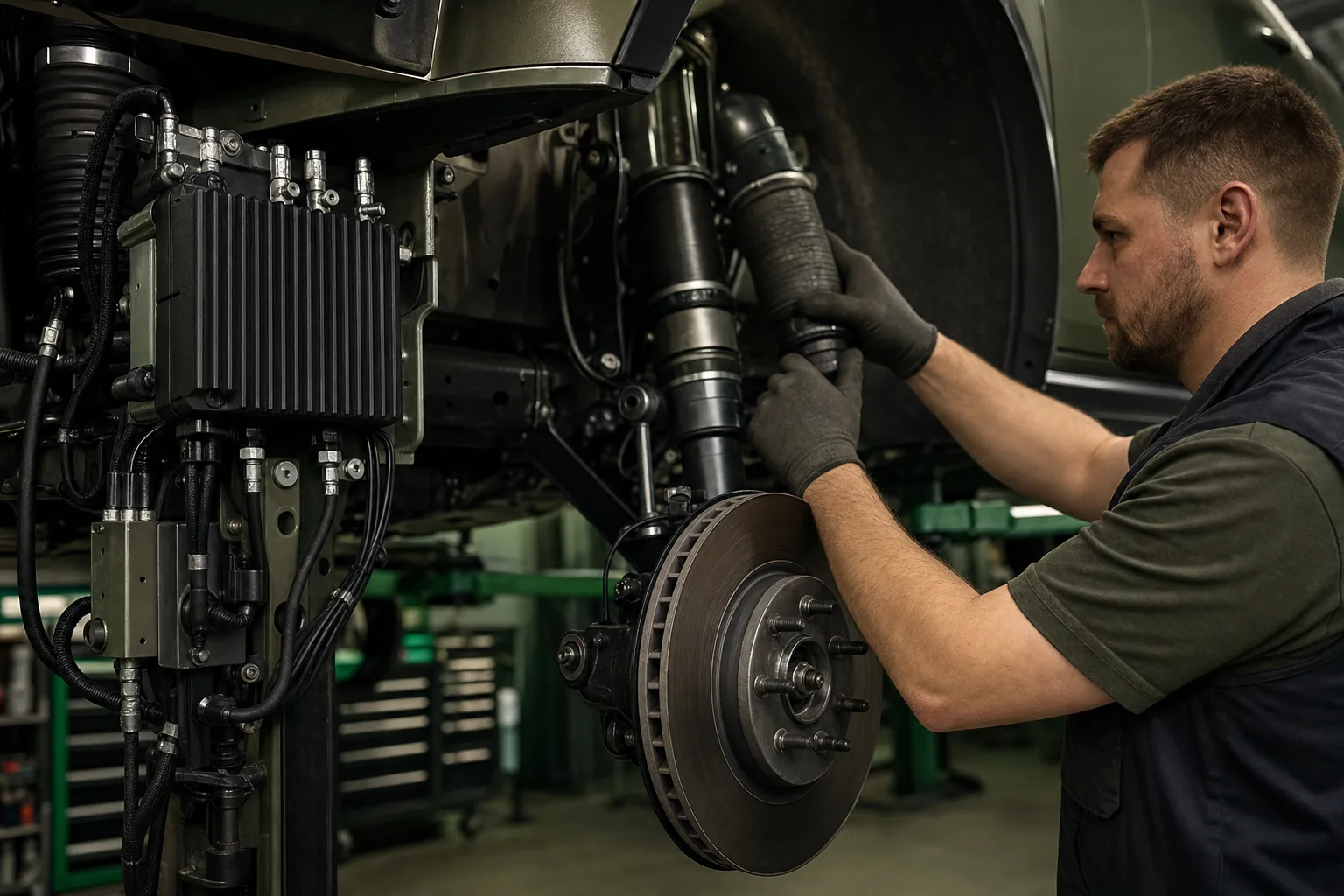
Wheel speed sensors provide the transmission module with ground speed independent of engine rpm. Discrepancies between left and right wheel speeds during turns are normal; persistent mismatches under straight-line acceleration indicate sensor drift, tone ring damage, or wiring faults. When the module receives implausible wheel speed data, it may inhibit shifts or extend shift overlap to prevent sudden torque changes that could aggravate traction loss.
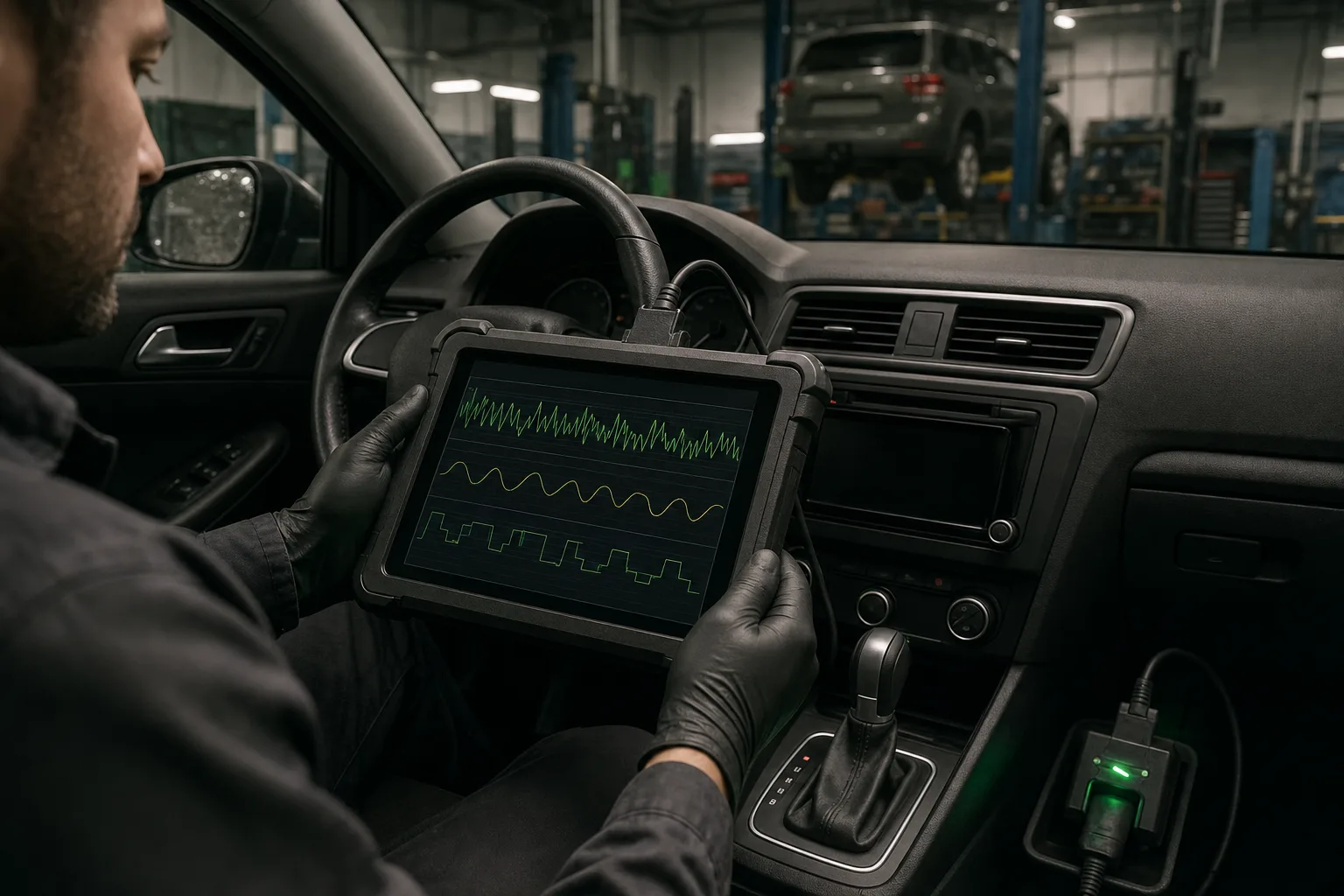
A failing rear wheel speed sensor on a rear-wheel-drive platform can delay upshifts across all gears because the module cannot confirm vehicle acceleration accurately. Front-wheel-drive vehicles may show hesitation only when turning if one front sensor reads incorrectly under lateral load. Technicians compare wheel speed PIDs from the transmission module against ABS module data — both should agree within a few kilometers per hour at steady cruise.
Solenoid Response Time and Line Pressure
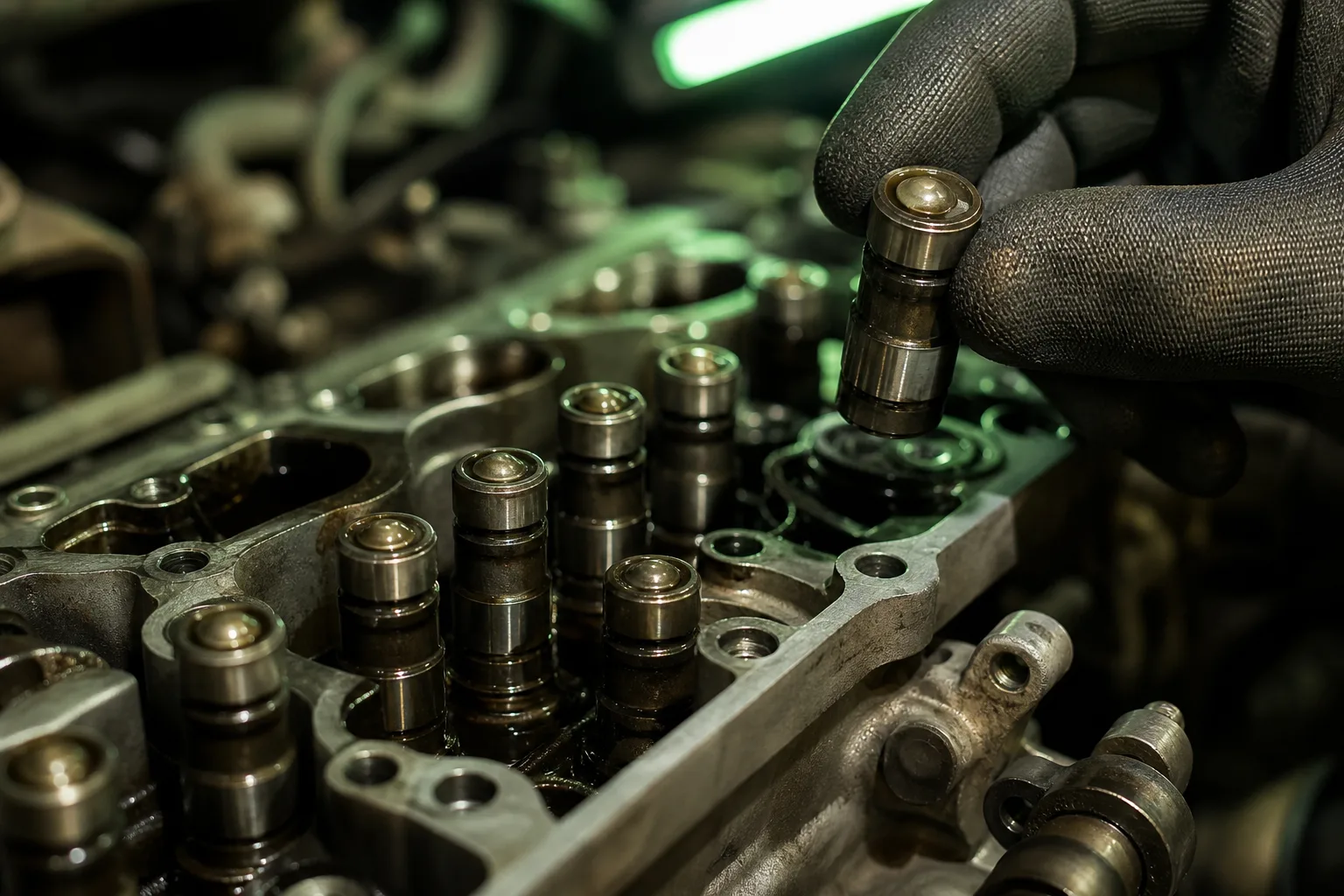
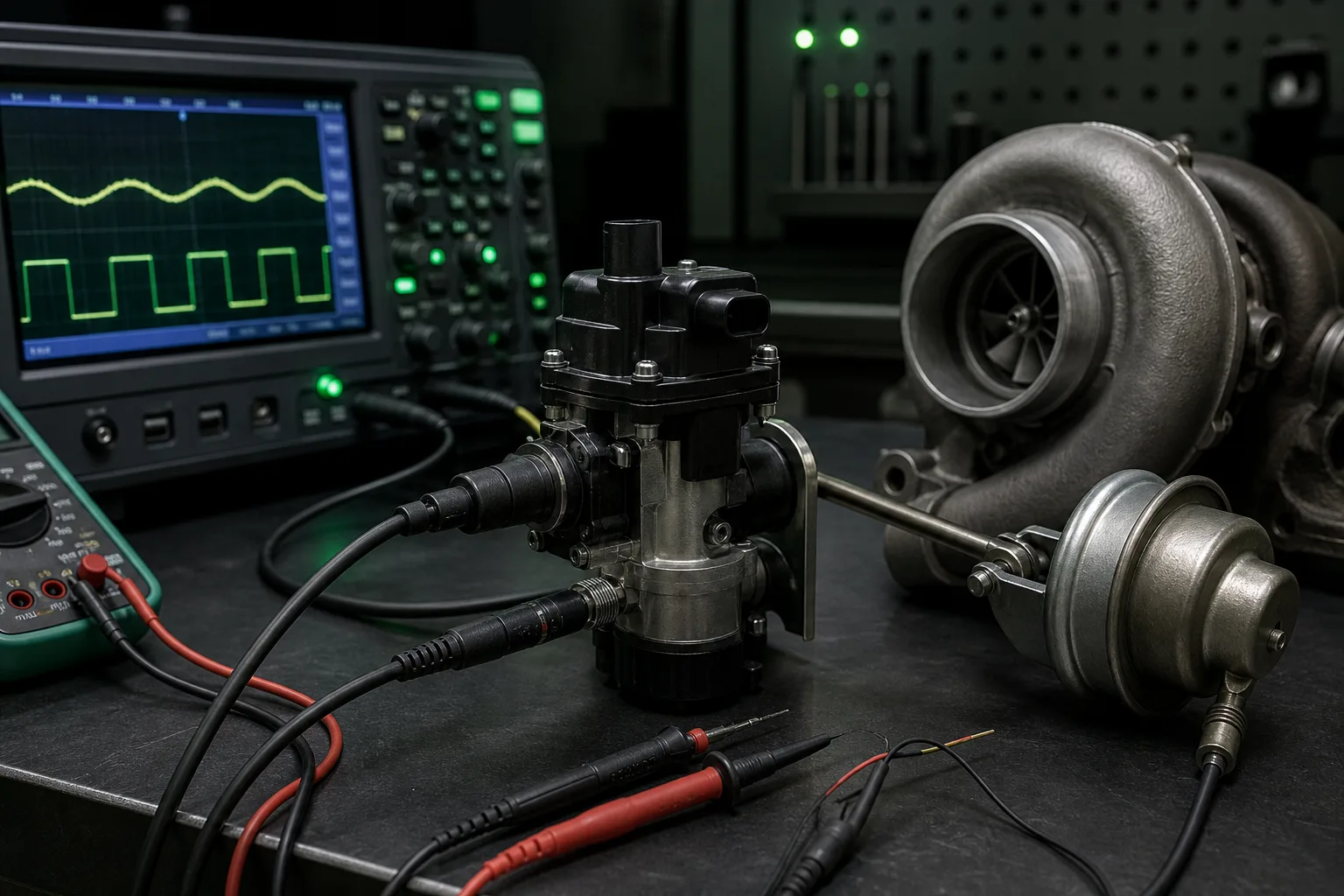
Shift solenoids control fluid routing to clutch packs and bands. Each solenoid has an expected response time measured in milliseconds during bi-directional testing. Slow or sticking solenoids delay clutch application, producing a perceptible pause between gear command and engagement. Line pressure that falls below specification — from a worn pump, contaminated fluid, or failing pressure regulator valve inside the valve body — prevents solenoids from generating enough force even when they activate on schedule.
- Hesitation on specific gears only often points to one solenoid circuit or clutch pack rather than global fluid failure.
- Hesitation across all gears under load suggests line pressure or pump volume problems.
- Electrical resistance outside specification in solenoid wiring creates delayed activation visible on scan tool commanded versus actual pressure graphs.
- After fluid service with incorrect fluid type or level, solenoid response can change immediately without mechanical wear present.
Fluid Condition Beyond Simple Age
Dark fluid alone does not explain hesitation. What matters is viscosity stability, additive depletion, water contamination, and the presence of clutch material or metal particles that restrict valve body passages. Fluid that has overheated loses friction modifier effectiveness, causing clutch slip that the module compensates for by altering shift timing — sometimes manifesting as hesitation as the module searches for reliable engagement pressure.
A fluid change may improve shift quality when contamination causes sticky valves, but it will not repair worn clutch friction surfaces or failed solenoids. Professional diagnosis includes fluid level check at operating temperature, inspection of pan magnet sediment, and smell or varnish assessment on the valve body when accessible. Comparing these findings with solenoid response tests prevents unnecessary transmission removal when a pressure or sensor issue is the actual cause.
Describing Symptoms Accurately for Diagnosis
Precise symptom description shortens diagnostic time significantly. Note whether hesitation occurs on upshifts, downshifts, or both; which gears are affected; whether the pause happens only when cold, only when hot, or consistently; and whether throttle position at the moment of the event was light, moderate, or wide open. Include any recent service history — fluid changes, battery replacement, wheel bearing work near speed sensors — that might correlate with symptom onset.
- Pause followed by harsh engagement suggests delayed solenoid response with eventual high pressure application.
- Rpm flare during the pause indicates clutch slip rather than simple timing delay.
- Hesitation accompanied by flashing transmission warning light requires immediate professional inspection before further driving.
Bring these observations to your technician before diagnostic work begins. Combined with scan tool data, road test replication, and pressure testing where applicable, accurate symptom reporting helps isolate whether wheel speed input, solenoid performance, or fluid condition — or a combination — is responsible for the shift quality you experience on the road.